Mortar and Refractory Castables
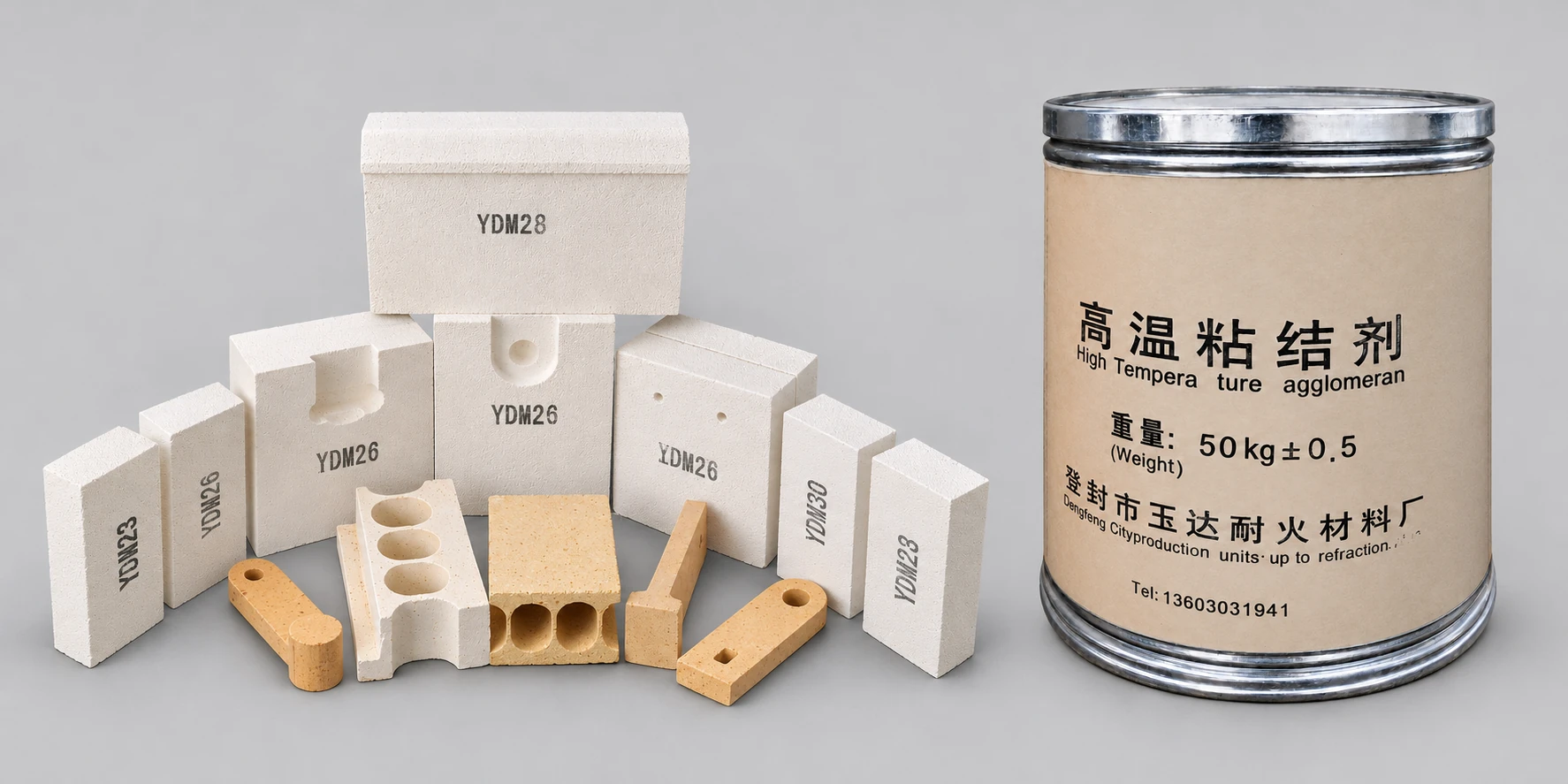
High-Temperature Refractory Binders
Description: Refractory powders are mixed with inorganic or organic binders. The powder is selected to match the physical and chemical properties of the brick being laid.
Features: 1. Good water retention. 2. Low linear shrinkage after heating.
3. Stable chemical properties. 4. Easy application.
Applications
Laying refractory bricks and shapes.
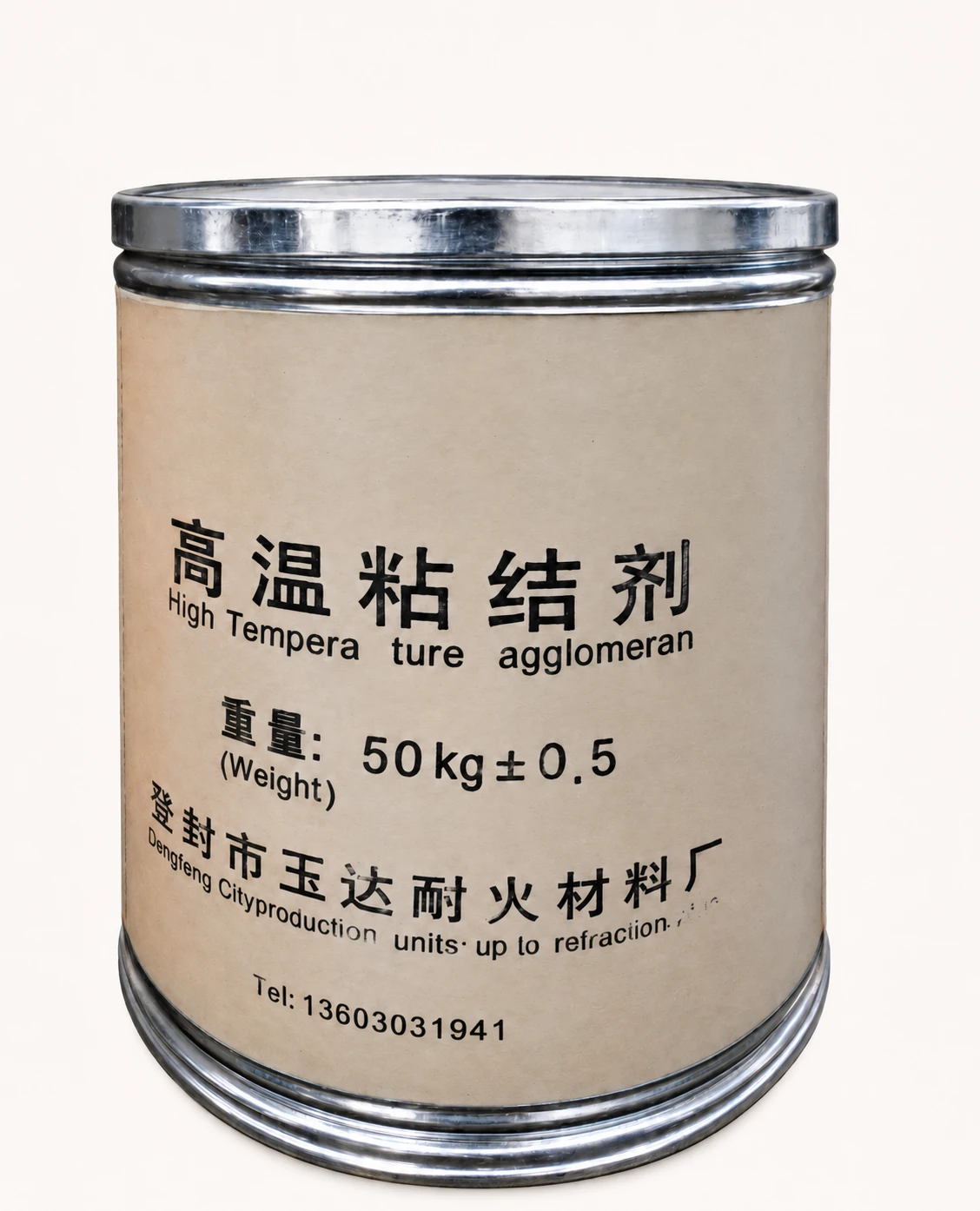
| Grade / Property | YDM Series Binder | High-Alumina Binder | Fireclay Binder | Acid-Resistant Binder | |
|---|---|---|---|---|---|
| Maximum Service Temperature, °C | 1500 | 1400 | 1250 | 900 | |
| Application Rate, kg/m² | 4.5~5.5 | 4.5~5.5 | 5~6.5 | 5~5.5 | |
| Consistency, mm | 160 | 170 | 180 | 160 | |
| Flexural Bond Strength, MPa | 110℃×24h | 2 | 2 | 2 | 650℃×3h ≥2.0 |
| 815℃×3h | 4 | 4 | 4 | ||
| Permanent Linear Change | ℃×3h | 1400 | 1400 | 1200 | 650 |
| % | -0.3 | -0.3 | -0.5 | ±0.5 | |
| Particle Size Distribution, % | 110℃×24h | 3 | 4 | 5 | 8 |
| 815℃×3h | 40 | 40 | 40 | 40 | |
| AlO ≥ % | 65 | 55 | 40 | SiO₂ ≥70% | |
| Acid Resistance, %, ≥ | 95 | ||||
Refractory Castables
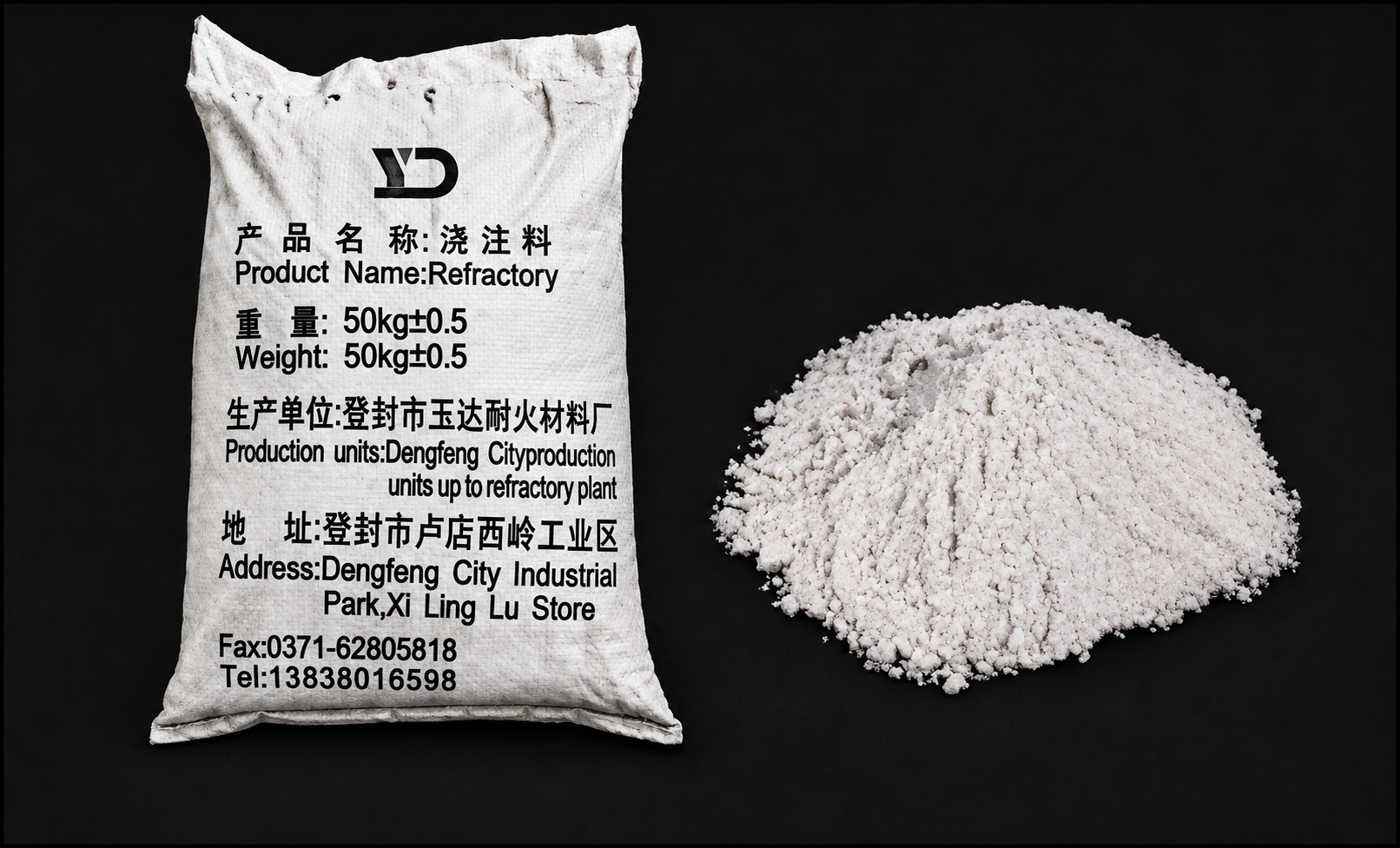
Description: Lightweight expanded clay, lightweight fired aggregate, and cenospheres are blended with calcium aluminate cement and ultrafine powders. Different lightweight aggregates can be selected to suit installation and design requirements.
1. High strength.
2. Good thermal insulation.
3. High abrasion resistance.
4. Low permanent linear change.
5. Easy installation.
Applications
Reactor and regenerator systems, settlers, flue linings in hot-air ducts, and insulating and abrasion-resistant layers in catalytic cracking units.
| Grade / Property | GLJ-0.8 | GLJ-0.9 | GLJ-1.0 | GLJ-1.2 | GLJ-1.4 | |
|---|---|---|---|---|---|---|
| Bulk Density, g/cm³ | 110℃×24h | 0.8 | 0.9 | 1.0 | 1.2 | 1.4 |
| 815℃×3h | 0.7 | 0.8 | 0.9 | 1.1 | 1.3 | |
| Cold Crushing Strength, MPa | 110℃×24h | 4 | 4.5 | 7 | 12 | 20 |
| 815℃×3h | 3 | 4 | 6 | 11 | 16 | |
| Modulus of Rupture, MPa | 110℃×24h | 0.8 | 1.0 | 1.5 | 2 | 3 |
| 815℃×3h | 0.5 | 0.8 | 1.0 | 1.5 | 2.5 | |
| Linear Change, % | 815℃×3h | 0.2 | 0.2 | 0.2 | 0.2 | 0.2 |
| Thermal Conductivity, W/(m·K), ≤ | (350±25℃) | 0.21 | 0.23 | 0.25 | 0.30 | 0.35 |
| Maximum Service Temperature, °C | 1000 | 1000 | 1000 | 1000 | 1000 | |
Refractory Mortars
Description: Refractory mortars are made by adding inorganic or organic binders to refractory powders. The powders are selected to match the physical and chemical properties of the refractory bricks being laid.
Features: 1. Low linear shrinkage after heating. 2. Stable chemical properties. 3. Easy application.
Applications
Laying refractory bricks and shapes.
| Property | Fireclay | High Alumina | Mullite | Corundum | ||||||
|---|---|---|---|---|---|---|---|---|---|---|
| NP-45 | LP-55 | LP-70 | MP-55 | MP-70 | MP-45 | GP-60 | GP-70 | GP-90 | ||
| Al₂O₃ % | ≥45 | ≥55 | ≥70 | ≥50 | ≥50 | ≥50 | ≥50 | ≥50 | ≥50 | |
| Modulus of Rupture, MPa | 110℃ | ≥2.0 | ≥2.0 | ≥2.0 | ≥2.0 | ≥2.0 | ≥2.0 | ≥2.0 | ≥2.0 | ≥2.0 |
| After High-Temperature Firing | ≥5.9 | ≥5.9 | ≥5.9 | ≥5.9 | ≥5.9 | ≥5.9 | ≥5.9 | ≥5.9 | ≥5.9 | |
| 1200℃ | 1400℃ | 1400℃ | 1400℃ | 1500℃ | 1350℃ | 1400℃ | 1500℃ | 1500℃ | ||
| Refractoriness, °C | ≥1700 | ≥1750 | ≥1790 | ≥1770 | ≥1790 | ≥1700 | ≥1790 | ≥1825 | ≥1850 | |
| Refractoriness under Load, T2, °C | ≥1200 | ≥1250 | ≥1300 | ≥1400 | ≥1500 | ≥1350 | ≥1550 | ≥1550 | ≥1700 | |
| Bonding Time, min | 1~2 | 1~2 | 1~2 | 1~2 | 1~2 | 1~2 | 1~2 | 1~2 | 1~2 | |
| Permanent Linear Change, % | - | - | - | - | - | - | 0~+1 1400℃×3h | - | - | |
| Particle Size Distribution, % | >0.5mm | ≤1.0 | ≤1.0 | ≤1.0 | ≤1.0 | ≤1.0 | ≤1.0 | ≤1.0 | ≤1.0 | ≤1.0 |
| ≤0.076mm | ≥50 | ≥50 | ≥50 | ≥50 | ≥50 | ≥50 | ≥50 | ≥50 | ≥50 | |