DADA TECHNOLOGY · ENGINEERED REFRACTORIES · GLOBAL SUPPLY
EnglishEspañolFrançaisDeutschالعربية
DADATECINDUSTRIAL MATERIALS

Ceramic Glaze Frits

Ceramic glaze frits for tableware, sanitaryware and other ceramic glaze systems. The supplied formulation example focuses on secondary glaze firing of bone china and magnesia porcelain. The brochure describes high-temperature, low-expansion and easy-clean formulations; the numerical values below refer to the illustrated frit and are not universal values for all grades.

Ceramic Glaze Frits

Technical specifications

ParameterSelection / acceptance requirement
Initial melting temperature850 °C
Hemisphere temperature1045 °C
Flow temperature1088 °C
Heating rate for melting test5 °C/min
Glaze firing temperature1080–1140 °C
Holding time1–2 hours
Trial recipe100 parts frit + 2–3 parts washed kaolin
Material : milling media : water1 : 2 : 2.04 (brochure ratio)
Milling fineness D504.8–5.2 μm
10,000-mesh sieve residue0.002–0.005% (brochure wording; confirm test method)
Linear expansion, 20–100 / 200 / 300 / 400 °C4.41 / 5.73 / 6.43 / 6.86; coefficient unit/scale not clearly stated in brochure
Volume expansion, 20–100 / 200 / 300 / 400 °C133.5 / 171.9 / 192.9 / 205.8; unit/scale requires confirmation
Lead / cadmium / radioactivityBrochure claims absence; confirm analytical results and applicable limits for the offered batch
Antibacterial / chemical resistanceBrochure performance claims require the full test reports and finished-product validation

Application scenarios

For the illustrated formulation, the frit is milled into a glaze suspension, applied to suitable ceramic ware and fired to form the glaze surface. Bone china and magnesia porcelain secondary firing are the principal uses described in the supplied product information.

Glaze preparation and dip application
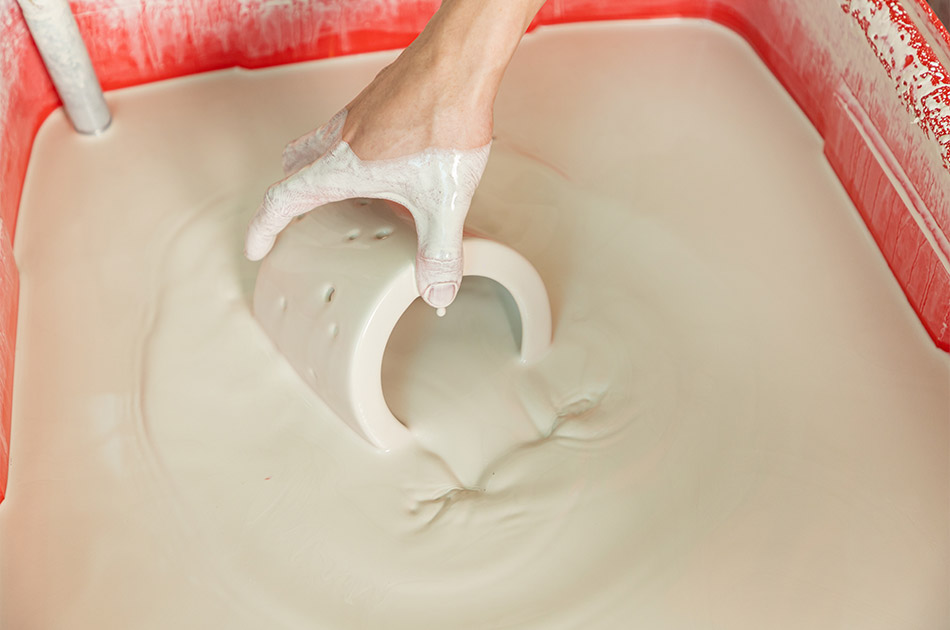
Ceramic mug being immersed in a liquid glaze bath

Prepare the glaze slurry to suit the application method. Dip, drain and dry the ware before firing; review slurry suspension, viscosity, coating thickness and the body surface. The brochure trial uses 100 parts frit with 2–3 parts washed kaolin and a milling D50 of 4.8–5.2 μm.
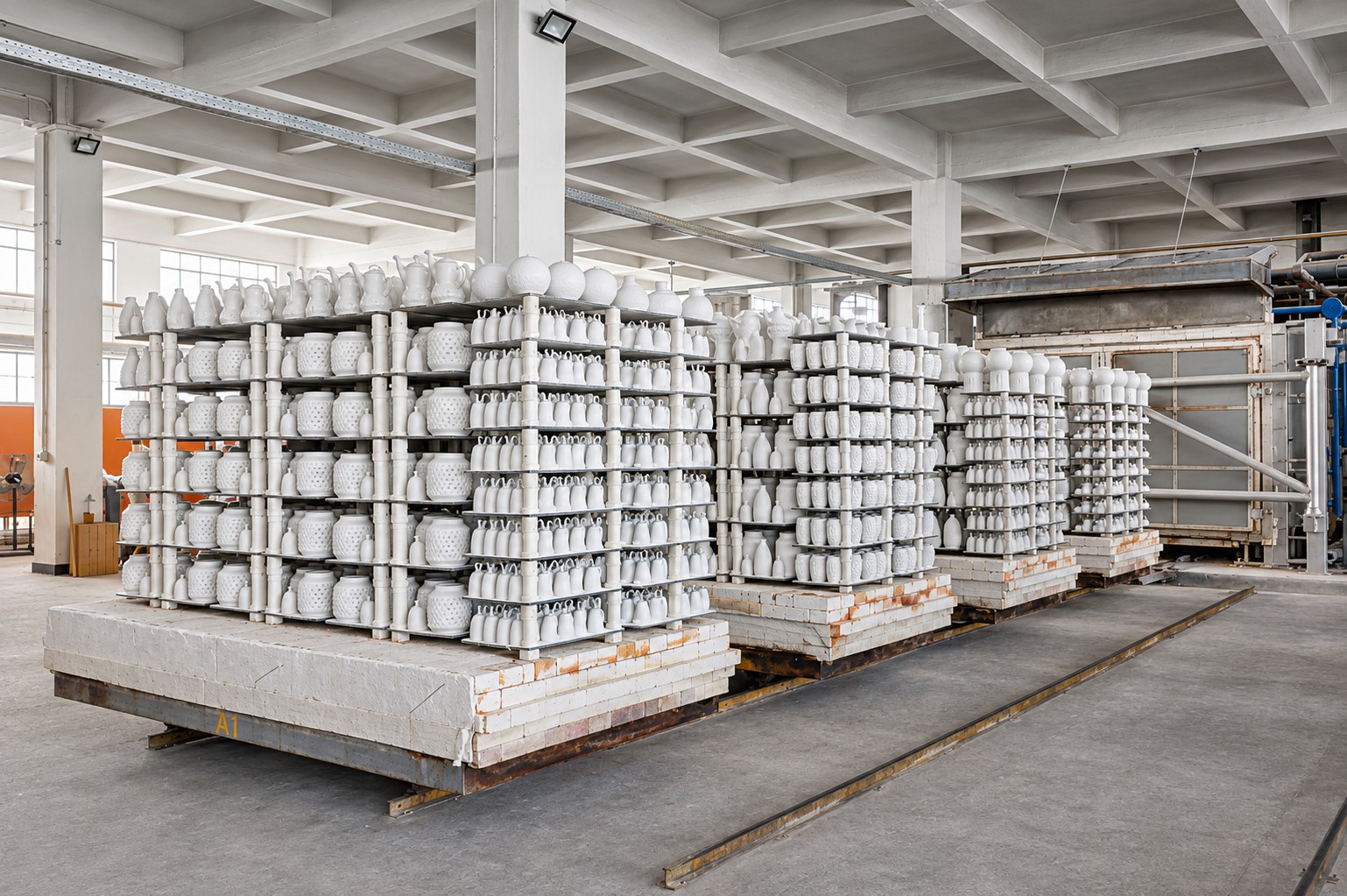
Secondary glaze firing

Ceramic tableware stacked on kiln cars in a production workshop

The coated ware is fired to develop a continuous glaze layer. For the illustrated frit, the brochure gives 1080–1140 °C with a 1–2 hour hold. Establish the actual cycle through body/glaze trials, checking crazing, pinholes, surface finish and chemical durability.

Production photographs illustrate real ceramic glazing and firing operations; they do not establish use of the specific frit grade shown here. The kiln-car photograph is digitally enhanced for display, not a dimensional or capacity record.